전시 소개 ABOUT THE EXHIBITION
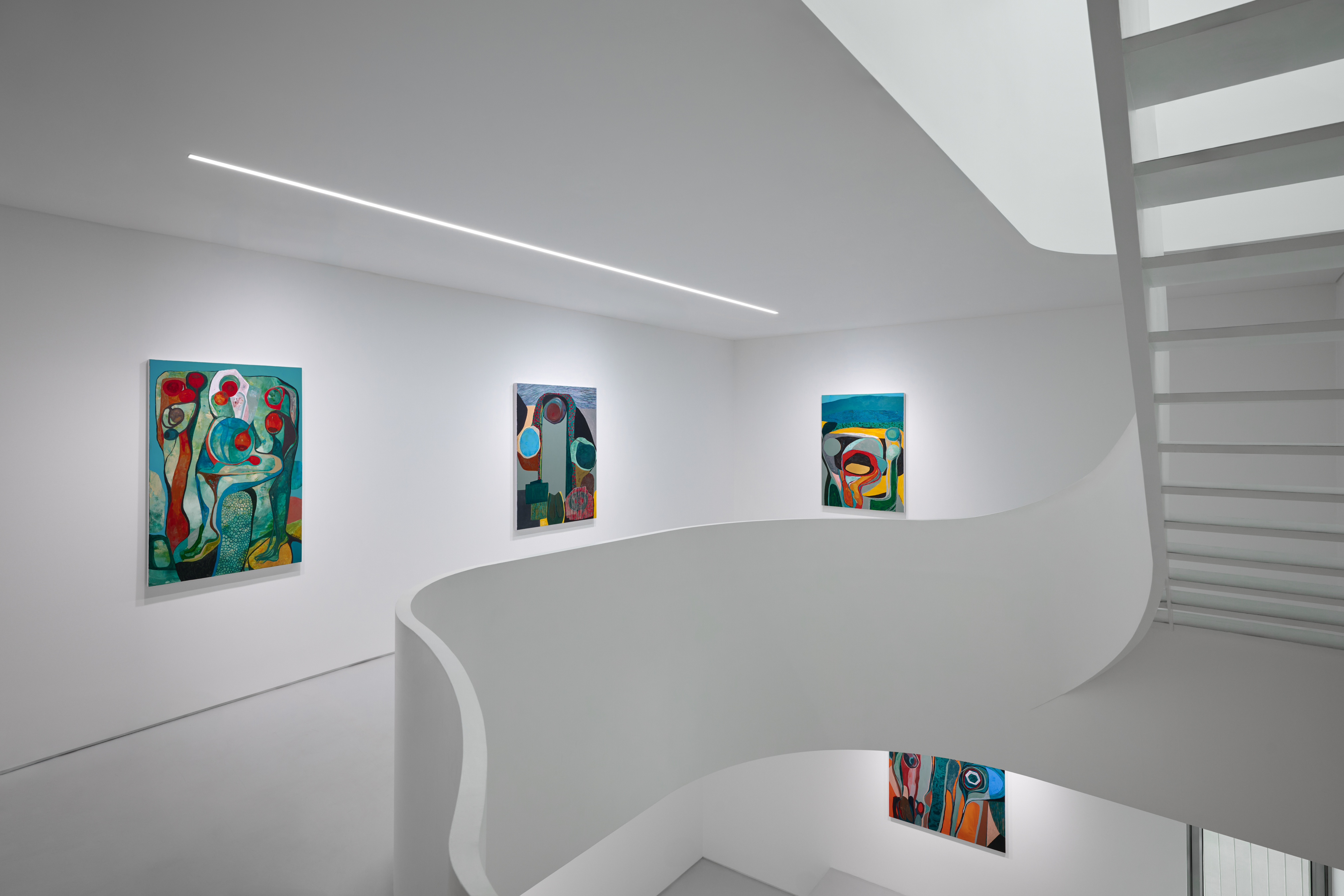
에스더쉬퍼 서울이 에티오피아 출신 작가 메리코켑 베르하누(Merikokeb Berhanu)의 아시아 첫 개인전 《Cellular Memory》를 오는 6월 9일부터 8월 14일까지 선보인다. 이번 전시는 갤러리와의 두 번째 협업으로, 신작 회화 6점을 소개하며 작가가 오랜 시간 탐구해온 생명과 기억, 자연과 기술의 관계를 새롭게 조명한다.
1977년 에티오피아 아디스아바바에서 태어난 메리코켑 베르하누는 에티오피아 모더니즘의 유산과 현대 추상회화의 언어를 결합해 독자적인 회화 세계를 구축해왔다. 그의 화면에는 세포와 식물, 신체와 풍경이 서로 뒤섞인 유기적 형상들이 등장한다. 이는 단순한 추상의 영역에 머물지 않고, 생명이 형성되고 변화하는 과정을 시각적으로 번역하려는 시도에 가깝다.
이번 전시에서 특히 눈길을 끄는 것은 자연과 기술이 맞물리는 접점에 대한 탐구다. 미국 이주 이후 경험한 대량 소비와 환경 문제, 기술 중심 사회의 변화는 작품 속 유기체와 회로망을 연상시키는 형태로 드러난다. 붉은 생명체를 닮은 형상과 신경망 같은 구조가 공존하는 화면은 자연과 인공, 생물학과 기술이 더 이상 분리된 영역이 아님을 암시한다.
전시 제목인 《Cellular Memory》는 세포가 과거의 경험과 환경적 자극을 기억하고 반응하는 생물학적 개념에서 출발한다. 그러나 작가에게 이 기억은 단순한 생명 현상이 아니라, 에티오피아와 미국 사이를 오가며 축적된 문화적 경험과 정체성의 층위를 의미한다. 작품에 별도의 제목을 부여하지 않는 이유 또한 여기에 있다. 특정 의미를 고정하기보다 관람객 각자의 경험과 기억 속에서 작품이 새롭게 해석되기를 기대한다.
메리코켑 베르하누의 작업은 최근 국제 미술계가 주목하고 있는 블랙 아트와 아프리카 디아스포라 담론과도 맞닿아 있다. 그는 2022년 제59회 베니스 비엔날레 본전시 《The Milk of Dreams》에 참여하며 국제적 주목을 받았으며, 현재 테이트 미술관, 샌프란시스코 현대미술관(SFMOMA), 덴버 미술관, 볼티모어 미술관 등 주요 기관에 작품이 소장돼 있다.
이번 전시는 단순히 한 작가의 신작을 소개하는 자리를 넘어, 오늘날 동시대 미술이 다루는 정체성과 이동성, 생태와 기술의 문제를 새로운 시각으로 바라볼 수 있는 기회가 된다. 세포와 신체, 풍경과 회로가 뒤섞이는 화면 앞에서 관람객은 생명이 기억을 품는 방식, 그리고 우리가 속한 세계가 얼마나 복합적으로 연결되어 있는지를 천천히 마주하게 된다.
자료 출처: 에스더쉬퍼
전시 전경: 에스더쉬퍼
Esther Schipper Seoul is pleased to announce Merikokeb Berhanu’s exhibition Cellular Memory. This is the artist's first solo presentation in Asia and her second with the gallery. On view will be seven new paintings.
Born in Addis Ababa, Ethiopia, Merikokeb Berhanu's formal language, color palette, and recurring motifs fuse elements from the history of Ethiopian art and its absorption and transformation of modernist influences, while also reflecting her experience in the United States, where she has been based for nearly a decade. Merikokeb received her Diploma of Fine Arts from Addis Ababa University in 2002, studying painting under Getahun Assefa at the Alle School of Fine Arts and Design. Getahun belonged to a generation of Ethiopian artists who expanded upon the work of modernist pioneers such as Skunder Boghossian* through greater abstraction and engagement with social realities, and whose influence on Merikokeb's practice remains palpable. Merikokeb's development of a distinct hybrid visual vocabulary reflects broader themes of diasporic experience.
Merikokeb's new paintings, produced in 2026 for this exhibition, represent a significant development in her practice. Working across a range of scales, from the large format Untitled CXIV and Untitled CXV to smaller, more concentrated compositions like Untitled CXX, Merikokeb continues to explore the semi-abstracted figurative language she has developed over the past decade, while pushing it into new chromatic and compositional territory. The works share a recurring visual vocabulary: interlocking organic forms that suggest bodies, landscapes, and cellular structures simultaneously, without resolving into any one of them. Equally fluid in their meaning are Merikokeb’s representations of the human body: individual feet or hands become visible but embody a more generalized human presence; elongated shapes with rounded heads could represent a group of flowers just as much as a community of men and women. Fragments of the human body are woven into a conflation of vegetal, organic, and perhaps even mineral form.
Running through this new group is an evident tension between the natural and the technological. The inclusion of technological elements has been linked to the artist’s move to the United States in 2017, where she confronted the realities of mass consumption, environmental pollution, and climate change. In Untitled CXX, budding red forms on the left find their mirror in what read as crimson circuit-board orbs on the right, root-like structures branching down below as if to anchor both worlds in the same soil. Untitled CXVIII operates like a geological cross-section, its layered strata teeming with organic life, while a circuit-board tracery sits just beneath the surface, close enough to feel like a second nervous system growing through the earth. The fantasy circuitry, sometimes rendered in a matrix-green and reminiscent of representations of cyberspace in early sci-fi, signals a modern, industrial and digital realm.
This is fertile ground, literally and conceptually. Merikokeb has long engaged with the friction between nature and technology, but in these paintings that relationship feels less like conflict and more like coexistence, two systems finding their way toward something shared.
Press Release: Esther Schipper
Installation View: Esther Schipper