전시 소개 ABOUT THE EXHIBITION
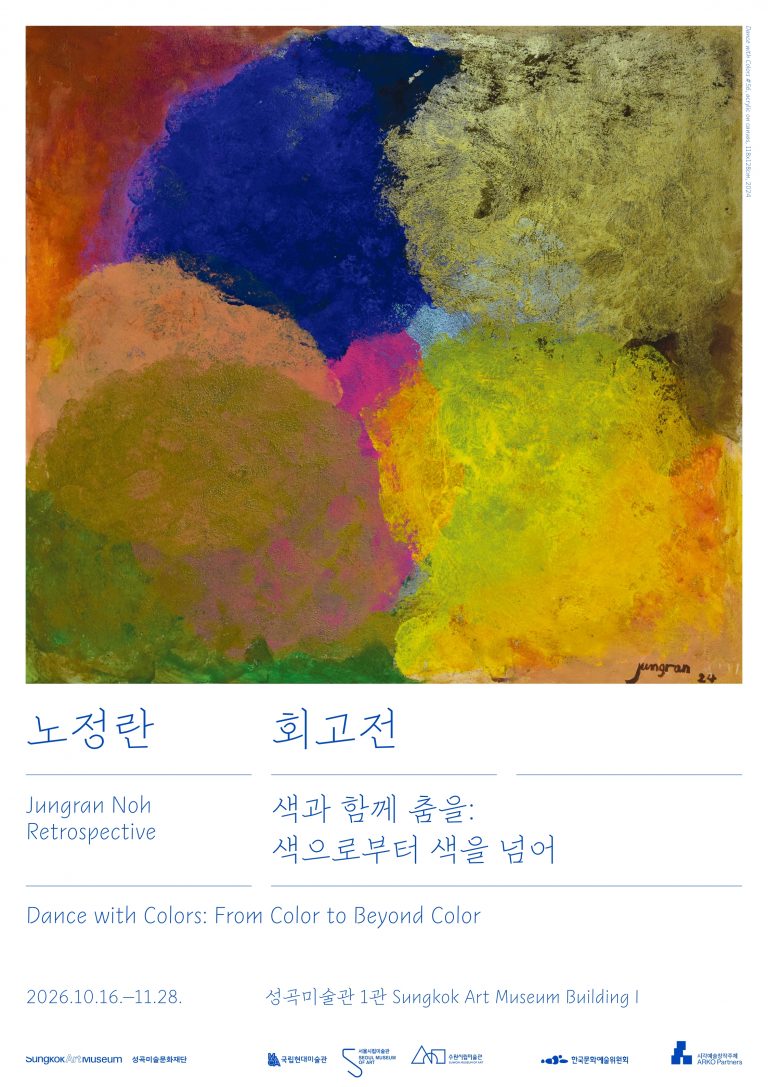
노정란(b.1948)은 1974년 서울 독일문화원에서 열린 첫 개인전에서 “내 안에서 거스를 수 없이 솟아나는 어떤 생명력에 이끌려 왔다”고 썼다. 이듬해 미국 애틀랜타에서는 자연에서 발견한 형태와 색을 이야기하며 “색과 소리가 함께 연주한다”고 했다. 이처럼 노정란에게 색은 일찍부터 단순한 조형 요소를 넘어, 자연과 세계를 감각하고 내면의 정서와 생의 에너지를 드러내는 회화의 언어였다.
노정란의 회화는 한국 전후 추상미술의 흐름과 맞닿으면서도 색을 중심으로 독자적인 방향을 구축해왔다. 1950~60년대 앵포르멜의 물질성과 신체적 제스처, 1970년대 단색화의 반복적 행위와 수행성은 그의 작업과 조형적 접점을 이룬다. 그러나 노정란에게 신체적 행위는 물성 자체를 탐구하기보다 자연과 기억, 감정에서 비롯된 색을 신체의 움직임을 통해 화면에 축적하는 과정에 가깝다.
1975년 미국으로 건너간 노정란은 조지아주립대학교와 캘리포니아주립대학교 롱비치에서 수학하며 색면회화(Color Field Painting)와 미니멀리즘(Minimalism)을 접했다. 이를 통해 색 자체의 회화적 가능성과 단순화된 화면 구성에 주목하게 되었다. 한편 황금빛 가을 논밭과 옥빛 우물, 들국화와 과꽃, 민화의 목단, 산사의 단청과 불화처럼 한국에서 체득한 색들은 오랜 시간이 지나서도 그의 내면에 생생하게 남아 있었다. 이러한 기억의 색들은 삶의 기쁨과 슬픔, 자연에서 받은 감각과 겹쳐지며 노정란만의 회화적 풍경으로 되살아났다. 그는 이처럼 색을 통해 펼쳐지는 내면의 세계를 ‘마음의 풍경(Mind Landscape)’이라 불렀다.
1980년대 후반 이후 그의 회화에서는 색과 색의 관계, 화면의 구조에 대한 탐구가 더욱 본격화된다. 이러한 변화는 1990년대 후반 〈황금분할〉과 〈색놀이〉 연작으로 이어지며, 색면의 분할과 색들 사이의 관계를 탐색하는 작업으로 전개된다.
2000년대 중반부터는 〈색놀이-쓸기〉와 〈색놀이-닦기〉 연작을 통해 색과 신체의 관계가 더욱 직접적으로 드러난다. 붓 대신 빗자루로 물감을 쓸고 닦으며 색을 여러 층으로 쌓아가고, 최근에는 화면 위의 물감을 직접 밟으며 온몸으로 작업하는 방식으로 나아가고 있다. 이 과정에서 우연과 통제, 긴장과 이완이 교차하고, 작가의 감정과 내면의 에너지는 화면에 흔적으로 남는다. 색과 함께 움직이고 호흡해온 시간은 이제 그 자체로 노정란 회화의 일부가 된다.
이번 회고전은 50여 년간 색과 함께해온 노정란의 회화 여정을 돌아본다. 색으로부터 출발해 색을 넘어, 끊임없이 회화의 새로운 가능성을 모색해온 그의 삶과 예술을 통해 한국 현대 추상회화의 또 다른 면모를 살펴보고자 한다.
글: 성곡미술관
At her first solo exhibition at the Goethe-Institut Seoul in 1974, Jungran Noh(b.1948) wrote, “I have long been drawn by an irresistible vitality rising from within.” A year later in Atlanta, she described forms and colors found in nature, writing that “color and sound play together.” From the beginning, color for Noh was more than a formal element. It became a language through which she could respond to nature and the world, while expressing emotion and the vital energy of life.
Noh’s painting developed in dialogue with postwar Korean abstraction while following its own path centered on color. Her work shares affinities with the materiality and physical gestures of Informel and the repetitive, performative processes of Dansaekhwa. Yet for Noh, repetition is less an exploration of materiality itself than a way of building color through bodily movement, transforming memories of nature and emotion into painting.
After moving to the United States in 1975, Noh studied at Georgia State University and California State University, Long Beach, where she encountered Color Field Painting and Minimalism. Through these experiences, she came to focus on the pictorial possibilities of color itself and simplified compositions. At the same time, colors rooted in her memories of Korea—the golden fields of autumn, jade-colored well water, wild chrysanthemums and asters, peonies in folk paintings, and the dancheong and Buddhist paintings of old temples—remained vivid in her memory long afterward. These colors of memory, intertwined with the joys and sorrows of life and sensations drawn from nature, resurfaced as Noh’s distinctly personal pictorial landscape. She called this inner world her “Mind Landscape.”
From the late 1980s onward, Noh increasingly explored the relationships between colors and the structure of the pictorial field. This development led to her Golden Section and Colors Play series in the late 1990s, in which she explored the division of color fields and the relationships among colors.
From the mid-2000s, the relationship between color and the body became more directly apparent through her Colors Play—Sweeping and Colors Play—Wiping series. Replacing the brush with a broom, Noh swept and wiped paint across the surface, building up layers of color. More recently, she has moved toward working with her entire body, stepping directly onto paint spread across the surface. Chance and control, tension and release intersect in this process, while the artist’s emotions and inner energy leave their traces on the surface. The decades she has spent moving and breathing with color have now themselves become part of Noh’s painting.
This retrospective traces Noh’s artistic journey with color over more than five decades. Through the life and art of an artist who began with color and moved beyond it, continually exploring new possibilities in painting, the exhibition sheds light on another trajectory within Korean abstract painting.
Text by Sungkok Art Museum