전시 소개 ABOUT THE EXHIBITION
공간은, 특히 ‘집’이라는 특수한 장소에 관해서는 저마다 하나의 수신처를 가지고 있다고 생각한다. 몇 년 전 페미니즘을 접한 나는 어머니에게 『82년생 김지영』을 건넸다. 며칠 뒤 어머니는 “힘들어서 읽을 수가 없었어”라고 말하며 책을 돌려주었다. 나는 어머니를 향해 너무 깊이 들어가 버린 듯한 기분이 들었다.
내가 줄곧 마음에 걸리는 것은 본가에 어머니의 방이 없다는 점이다. 우리 자녀들에게는 각자의 방이 있었고 아버지에게는 서재도 있었지만, 어머니는 늘 거실 의자 위에서 몸을 작게 웅크린 채 시간을 보냈다. ‘어머니’가 자신만의 방을 갖지 못한다는 것은 우리 가족만의 일이 아니다. 나는 건축을 업으로 삼으면서, 최근 몇 년간 어머니와의 인터뷰와 사진 기록을 반복해 왔다.
“그래도 엄마가 혼자 방에 들어가 있을 수는 없잖아”라는 어머니의 말에서, 나는 그곳에 건축 자체의 구조만으로는 설명되지 않는 무언가가 존재한다는 것과, 어머니에게 자리한 ‘할 수 없을지도 모른다’는 내면을 함께 읽는다. 아버지에게는 일을 위한 서재가, 나에게는 분홍색 카펫이 깔린 방과 드레스룸이 주어졌고, 남동생의 방에는 파란색 카펫이 깔려 있었다. 한편, 그렇게 각자에게 주어진 모든 수신처가 결국 어머니를 향하고 있었던 것처럼 느껴진다. 처음 어머니에게 배정된 공간이 복도의 홀이었던 것처럼, 어머니는 모든 공간을 향하고 있었고, 동시에 모든 화살은 어머니를 향하고 있었다.
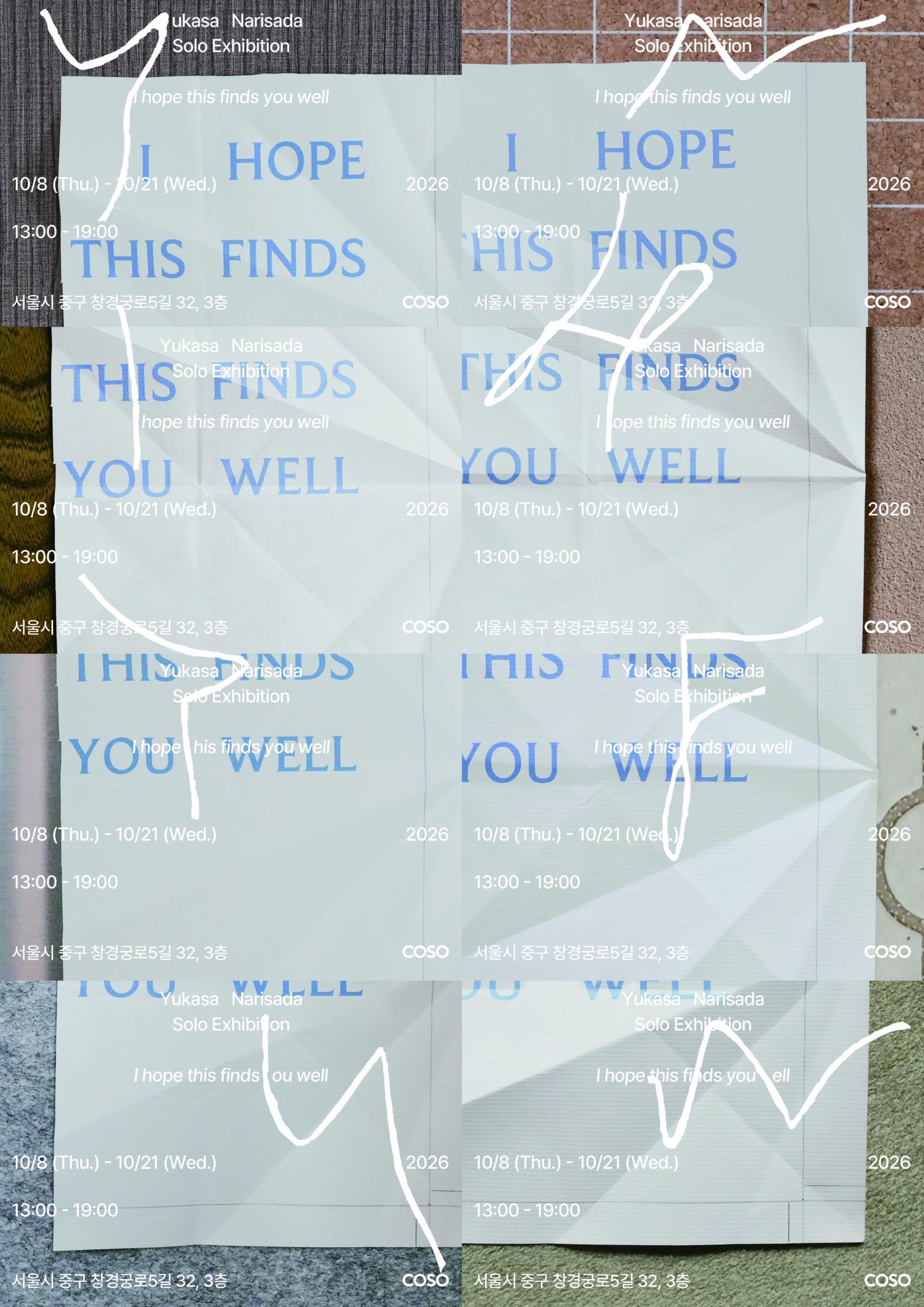
전시 제목으로 선택한 “I hope this finds you well”은 직역하면 “이 편지가 당신에게 닿을 즈음에”라는 뜻으로, 편지가 도착할 것을 전제로 하면서도 그곳에 이르기까지의 시간에 건네는 인사말이다. 나는 여기에서 어머니를 향하는 화살표 같은 것을 부드럽게 그려내고 싶다. 이번 전시에서는 어머니의 흔적 -- 다소 과할 정도의 정리, 소파에서 잠들기 위한 준비, 허공에 매달린 듯한 발끝 -- 을 담은 사진을 아교로 패널에 정착시킨다. 유화 물감으로 더해지는 미세한 장식은 단단하게 주어진 화면의 윤곽을 느슨하게 풀어내며, 부드러운 것과 여백, 혹은 드물게 사진 속에 포착된 어머니의 몸에만 깃든다. 부엌 배수구의 거름망을 바라보며, 나는 이것을 그렸다. 모든 것을 받아낼 수 있을 것 같으면서도, 실은 몹시 섬세한, 그 ‘받아내는 자리’로서의 어머니적인 것을 향해.
글|나리사다 유카사
I believe every space, and especially the particular place we call 'home', has its own addressee. A few years ago, after encountering feminism, I gave my mother a copy of 'Kim Jiyoung, Born 1982'. A few days later she returned it, saying, "It was too hard; I couldn't read it." I felt as though I had gone too far into her.
What has stayed with me is that my mother has no room of her own in our family home. We children each had a room, and my father even had a study, but my mother always spent her time curled up small on a chair in the living room. A 'mother' not having a room of her own is not unique to our family. Working in architecture, I have spent recent years repeatedly interviewing and photographing my mother.
In her words, "Still, a mom can't just go shut herself in a room," I read both something that the structure of architecture alone cannot explain and an inner sense of 'maybe I can't' within her. My father was given a study for work; I was given a room with pink carpet and a dressing room; my younger brother's room had blue carpet. Yet it feels as though every addressee given to each of us ultimately pointed back to my mother. Just as the first space assigned to her was the hallway, she faced every space, and at the same time every arrow pointed toward her.
The title, "I hope this finds you well," is a greeting that presumes a letter will arrive while addressing the time it takes to get there. Here I want to gently draw something like an arrow toward my mother. In this exhibition, photographs holding her traces — slightly excessive tidiness, preparations for falling asleep on the sofa, toes that seem to hang in the air — are fixed to panels with animal glue. Fine ornaments in oil paint loosen the firm contours of the picture, dwelling only on soft things, on empty space, or, rarely, on my mother's body caught in the photograph. Looking at the strainer in the kitchen sink drain, I painted this — toward the maternal as a 'place that receives', which seems able to take in everything yet is in fact deeply delicate.
Text | Yukasa Narisada