전시 소개 ABOUT THE EXHIBITION
최수련 작가의 이번 개인전에 대해 글을 쓰기 위해 작업에 대한 자료를 요청하자, 작가는 먼저 ‘3중 대역본’이라는 파일명의, 작가 자신이 즐겨 읽는다는 지괴소설을 보내왔다. 새 전시에 선보이는 작업에 들어갈 이야기로, 중국어 원문을 작가의 방식대로 영어와 한국어로 직역한 세 개의 언어로 된 텍스트 파일이었다. 나는 중국 고전 지괴소설이라는 것을 처음 읽어봤는데, 인과관계에 기초한 서사 구조를 가지지 않고 급작스럽게 끝나는 것이 낯설면서도, 동시에 한국 민담이나 전설 속 이야기들과 멀지 않은 듯한 익숙한 느낌이 꽤 흥미로웠다. 지괴소설에서는 살아 있는 자와 죽은 자의 세계가 구분되지 않고 서로 연결되어 영향을 끼치며, 서사 전개의 논리가 뚜렷하지 않다는 점이 특히 인상적이었다.
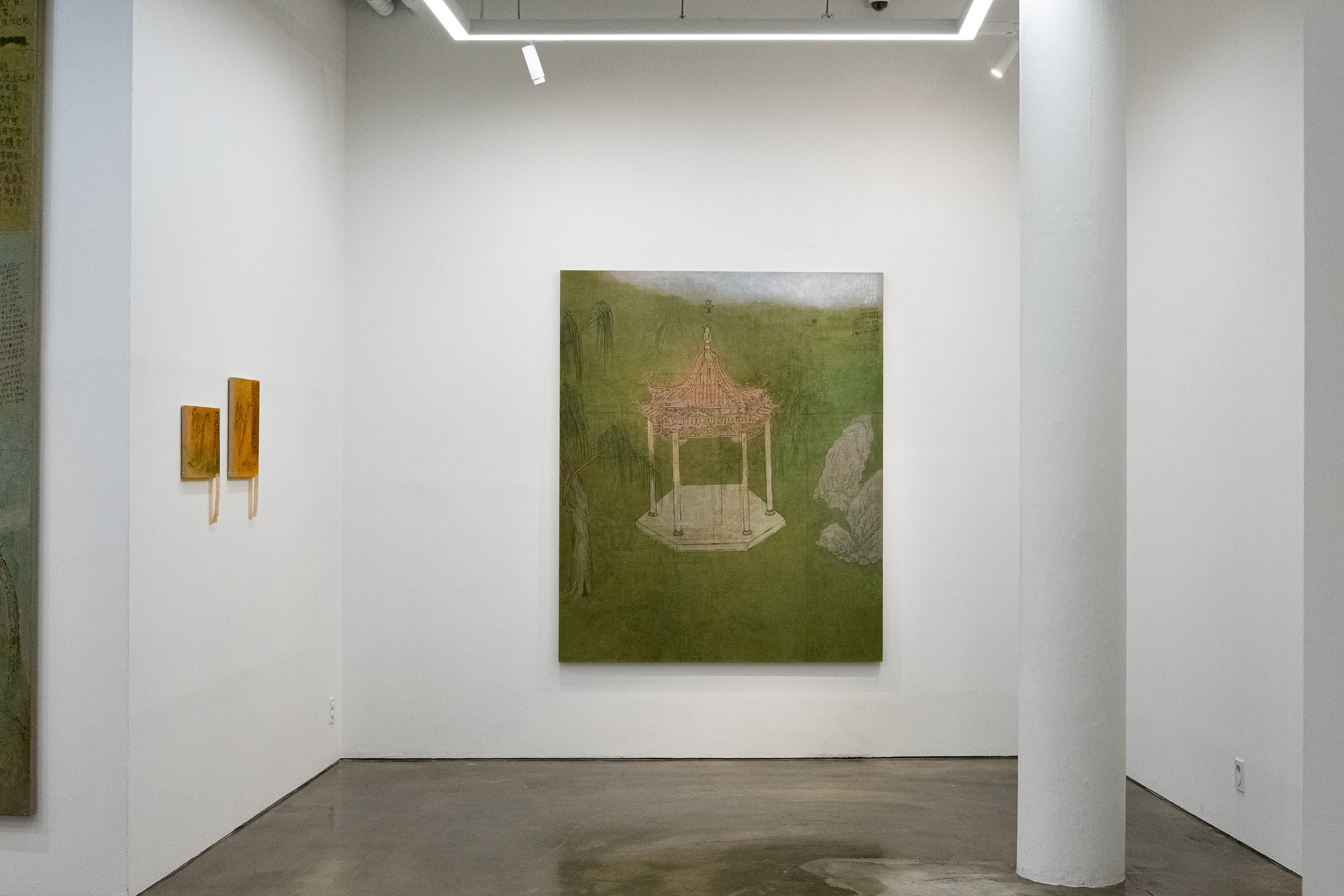
최수련은 이후 앞의 이야기가 들어간 작품을 보여주었다. 여기서 이야기가 들어갔다고 하는 것은 한자 원문으로 쓰인 원전 소설과 독음 등을 달아 번역해 놓은 한글 텍스트가 소설의 이야기를 연상시키는 이미지와 함께 표현된 작품이라는 의미다. 작가가 보여준 작품에서 세 가지 요소가 눈에 띄었다. 최수련이 오랫동안 그려온 텍스트가 여전히 회화의 큰 부분을 차지하고 있다는 사실과, 그가 그린 형상적 이미지가 사실은 구체적인 존재를 지시하는 것이 아니라는 점, 그리고 그림이라는 큰 프레임 안에 필사한 또 다른 프레임이 들어가 있는 듯 구성된 이중적 구조가 그 세 가지였다.
나는 작가가 보내준 지괴소설을 먼저 읽었기 때문에, 작품을 보자마자 그림에 들어간 텍스트가 어떤 이야기에 해당하는지 찾아보려고 했다. 그런데 한글로 그려진 문자를 조금 읽다 보니, 나의 읽기가 독해에 머무르지 않고 그림의 다른 지점으로 옮겨간다는 것을 깨달았다. 문서 파일이나 책의 형식과 달리, 최수련의 텍스트는 한 번에 쉽게 읽히지 않으며 계속 미끄러진다. 글자를 따라 읽으며 의미를 찾으려다 보면, 어느 새 문자의 색과 균형, 움직임을 더 살피게 된다. 여러 번 쓰고 지운 듯한 문자의 감각적인 흔적, 단정한 한글 서체가 동양적 풍경 이미지와 어울리는 방식, 형광색으로 표시한 독음에서 표현되는 강약 등 시각적인 요소가 눈에 들어온다. 글이 뻗은 방향으로 부드럽게 이어지는 이미지의 흐름과 화면 전체가 풍기는 은근한 기운도 잘 보인다.
최수련의 회화에서 텍스트는 이야기의 내용을 전달하기 위한 독해용 문자가 아니라 그림 전체를 작동시키는 역할을 한다. 다시 말해, 그의 그려진 텍스트는 작품의 이미지를 설명해주는 부수적이고 장식적인 요소가 아니라, 전체 작품의 의미를 발생시키는 기호이자 회화 그 자체로 볼 수 있다. 글이 읽히다가 멀어지면서 그림으로 보이는 것은 마치, 잘 안 보이는 대상에 눈의 초점이 맞았다 안 맞았다 하는 것과 비슷한 동적인 경험처럼 느껴진다. 최수련의 작품 속 텍스트는 그렇게 드러났다 흐려지기를 반복하며 그의 회화를 더 흥미롭게 만든다.
고정되어 선명하게 제시되지 않는 것은 텍스트뿐만이 아니다. 최수련이 그린 이미지 역시 약한 미풍에 흔들리듯 계속 아른거린다. 그림의 프레임 속 버드나무와 도화나무, 연꽃 등은 중국을 비롯한 아시아를 떠올릴 때 흔히 등장하는 수목이기 때문에 특정 이야기와 연결시키기 어렵다. 그마저도 노이즈가 섞여 나오던 픽셀 낮은 옛날 텔레비전 속 이미지처럼 흐릿하게 그려져 있고, 작가가 프레임 밖에 연습 삼아 그린 것처럼 보이는 형상이나 텍스트와 시각적 경중도 크게 구분되지 않는다. 심지어 어떤 그림에서는 종이의 주름이나 배경에 그려진 패턴이 이미지 위를 지나가기도 한다. 이 모든 표현 방식은 작가가 그린 형상들이 어떤 대상을 충실히 묘사하거나 지시하기 위한 것이 아님을 말해준다. 최수련이 그린 것은 이야기 속 나무나 실제 세상의 꽃이 아니라, 보이지 않는 어떤 세계라는 것을 짐작할 수 있다. 그 세계에서는 이야기와 그림, 동양과 전통에 대한 두리뭉실한 고정관념이나 회화의 딱딱한 정의, 논리적 정렬과 구분 등이 원래와 같지 않고 자유롭게 흔들리며 느슨하게 흐트러져 있음이 분명하다.
최수련은 그림을 그린 종이 안에 또 하나의 프레임을 그리는데, 이것은 지괴소설의 한 페이지를 베껴 쓴 것처럼 보이기도 한다. 그가 중국의 옛 소설을 붓으로 옮겨 쓰는 필사의 행위는 프랑스의 문학비평가 제라르 제네트(Gérard Genette)가 사용한 ‘팔랭프세스트(palimpseste)’라는 개념과 연결된다. 팔랭프세스트는 원래 쓰여 있던 글을 지우거나 희미하게 만든 양피지 위에 새로운 글을 다시 쓴 것을 가리키는 말로, ‘다시 쓰다’라는 의미의 고대 그리스어에서 비롯되었다. 제네트는 이 용어로 이미 존재하는 원전을 창작의 원천으로 삼으면서도 그것을 그대로 복제하지 않고 변형하거나 모방하여 새로운 작품으로 다시 쓰는 창작의 방식을 설명한다. 팔랭프세스트에서 원전은 완전히 지워지거나 없어지지 않고 계속 흔적을 남기며 새로운 의미로 다시 태어난다.
팔랭프세스트의 이미지처럼 최수련도 필사가 들어간 회화에 이야기의 원본을 유지시키면서 그 위에 새로운 의미를 덧입힌다. 그의 작품에서 중국 고전 소설 텍스트는 시각적 이미지로 바뀌고, 미술 전시장이라는 공간에서 회화로 읽힌다. 관객들은 최수련이 그린 텍스트를 물리적으로 벽에 걸 수 있는 현대미술 작품으로 감상하며 보고 읽는다. 현대미술 작품으로서 최수련의 회화는 텍스트와 이미지, 소설과 미술, 전통과 현재, 보이는 것과 보이지 않는 것을 구분 하는 경계를 넘나들고 구분과 정의를 새롭게 질문하며 의미의 층위를 더한다. 이것은 인간과 귀신, 현실과 비현실 등의 경계를 명확히 구분되지 않는 지괴소설 속 세계의 구성 방식과도 유사하다. 최수련의 필사 회화는 그렇게 원전의 흔적을 유지한 채 그 위에 새로운 작품이 다시 쓰이는 팔랭프세스트적 상태를 만들어낸다. 다른 색으로 프레임 밖에 그려진 한글 번역과, 프레임을 넘나드는 한자 독음과 패턴, 이미지 역시, 작가가 고대 소설 원전 위에 자신의 회화 세계를 적극적으로 교차시키는 방식으로 볼 수 있다.
최수련의 회화는 무엇을 명확하게 보여주기 보다, 보이는 것과 보이지 않는 것 사이를 진동하며 미세하게 움직인다. 그림 속 텍스트는 어느 순간 이미지로 변하고, 구체적인 대상을 가리키는 듯하던 이미지는 다시 동양에 대한 두리뭉실한 개념으로 흐려진다. 필사된 중국의 고대 소설은 현재의 회화가 되고, 원본의 흔적은 새로운 회화 위에 포개진다. 필사와 창작, 텍스트와 이미지, 소설과 회화, 현실과 비현실, 그리고 전통과 현재의 느슨해진 경계 위에서 최수련의 그림은 하나의 정의로 고정되지 않은 채 선명해졌다 흐려지기를 반복하며 우리 눈 앞에서 괴이하고 아름답게 흔들린다.
*최수련이 보내준 중국 지괴소설 중 ‘섭포의 이상한 노래’에 ‘일이 이상하고 말이 괴이하다’는 표현이 나온다. 나는 이 문장이 꽤 마음에 들었는데, 이상하고 괴이하다는 형용사가 최수련의 회화가 시도하는 경계를 넘어서는 새로운 감각적 지점을 잘 표현한다고 생각한다. 최수련은 현재 자신이 재번역한 지괴소설을 책으로 만드는 중이다.
When I asked Choe Sooryun for materials on her work in preparation for a text about her upcoming solo exhibition, she first sent me a file titled Threefold Translation, containing strange tales that she said she enjoyed reading. The file consisted of texts in three languages: the original Chinese, translated literally into English and Korean according to the artist’s own approach. These were stories that would feature in the works presented in her new exhibition. It was my first time reading classical Chinese tales of the strange (zhiguai), and I found it intriguing that their lack of a narrative structure based on cause and effect, along with their abrupt endings, felt unfamiliar, while at the same time evoking a curious familiarity, as though they were not so far removed from Korean folk tales and legends. What struck me in particular was how, in these tales, the worlds of the living and the dead were not clearly separated but remained interconnected, influencing one another, and how the logic of narrative progression was far from apparent.
Choe subsequently showed me a work incorporating one of the stories I had read. By “incorporating” the story, I mean that the work brought together the original tale written in Chinese characters, a Korean text transcribed with readings and other annotations, and images that evoked the story. Three aspects of the work caught my attention. First, text, which Choe has been painting for many years, continued to occupy a substantial part of the composition. Second, the figurative images she painted did not, in fact, refer to any specific entities. Third, the work was structured as though another frame, containing a handwritten transcription, were nested within the larger frame of the painting.
Since I had read the strange tales Choe sent me beforehand, I tried to identify which story the text in the painting referred to as soon as I saw the work. But as I began to make out the Korean characters, I realized that my attention was moving beyond comprehension, shifting instead to other parts of the painting. Unlike a document or a book, Choe’s text does not yield itself easily; it continually slips away. As I follow the characters in search of meaning, I soon find myself attending more closely to their colors, balance, and movement. My eye is drawn to the sensuous traces of characters that seem to have been written and erased several times, the way the neat forms of Korean script harmonize with images of an East Asian landscape, and the variations in emphasis conveyed by the fluorescent colors used to mark pronunciations. I also begin to notice the gentle flow of images extending in the direction of the text, as well as the subtle atmosphere that pervades the entire composition.
In Choe’s paintings, text does not simply convey the content of a story. Rather, it sets the entire painting in motion. Her painted text is neither a secondary nor a decorative element that explains the images, but a sign through which the meaning of the work as a whole emerges. It can also be understood as painting in its own right. The way the writing gradually recedes from comprehension and comes into view as an image feels like a dynamic experience in which the eye repeatedly brings an indistinct object into and out of focus. By alternating between legibility and obscurity, the text makes Choe’s paintings all the more intriguing.
It is not only the text that resists being fixed and clearly defined. The images Choe paints also continue to shimmer, as though stirred by a gentle breeze. The willows, peach trees, and lotus flowers within the frames are familiar motifs often encountered when thinking of China and Asia more broadly, making it difficult to connect them to any particular story. They are rendered so indistinctly that they resemble images on an old television with low resolution and static interference. Nor is there a clear visual hierarchy between these images and the forms or texts that appear almost like sketches outside the frame.In some paintings, even the creases of the paper or patterns drawn in the background pass across the images themselves. All these modes of expression suggest that the forms Choe paints are not intended to faithfully depict or point to anything in particular. One begins to sense that what she paints are not the trees in a story or the flowers of the actual world, but some unseen world. In this world, vague, fixed notions of stories and images, of the East and tradition, along with rigid definitions of painting and the logical ordering and separation of things, no longer hold their usual form. Instead, they seem to sway freely and fall into a loose disarray.
Within the paper on which she paints, Choe draws another frame, one that also resembles a page copied from a zhiguai tale. Her act of transcribing these old Chinese stories with a brush brings to mind the concept of the palimpsest, used by the French literary critic Gérard Genette. Originally, a palimpsest referred to parchment on which new writing was inscribed after the original text had been erased or faded. The term derives from an ancient Greek word meaning “to write again.” Genette used it to describe a mode of creation in which an existing source serves as the basis for a new work, not through direct reproduction, but through transformation or imitation. In a palimpsest, the original is never entirely erased or lost; it continues to leave traces as it is reborn with new meanings.
Like the image of the palimpsest, Choe’s paintings incorporating handwritten transcriptions preserve the original story while layering new meanings over it. In her work, the texts of classical Chinese tales are transformed into visual images and encountered as paintings within the space of an art exhibition. Viewers look at and read Choe’s painted text as a work of contemporary art, something that can be physically hung on a wall. As works of contemporary art, her paintings cross the boundaries between text and image, fiction and painting, tradition and the present, the visible and the invisible, while raising new questions about the distinctions and definitions that separate them and adding further layers of meaning. This is also akin to the way the world of zhiguai tales is constructed, with boundaries between humans and ghosts, reality and unreality, never clearly defined. Choe’s paintings of handwritten transcriptions thus create a palimpsestic state in which a new work is written over the original while preserving its traces. The Korean translations, rendered in a different color outside the frame, along with the readings of Chinese characters and the patterns and images that cross the frame, can likewise be understood as ways in which the artist actively brings her own pictorial world into contact with the ancient texts.
Rather than showing something clearly, Choe’s paintings move subtly, oscillating between the visible and the invisible. The text in a painting becomes an image at one moment, while an image that seems to point to a concrete object dissolves once again into a vague notion of the East. Ancient Chinese tales, transcribed by hand, become paintings in the present, and traces of the original are layered over anew in the work. On the loosened boundaries between transcription and creation, text and image, fiction and painting, reality and unreality, tradition and the present, Choe’s paintings resist being fixed within a single definition. They repeatedly come into focus and fade from view, swaying before our eyes in a manner both uncanny and beautiful.
*Among the Chinese zhiguai tales Choe Sooryun sent me, the story “Strange Song of Nie Bao” contains the phrase “The events are strange, and the words uncanny.” I was particularly taken with this sentence, as I felt that the adjectives “strange” and “uncanny” aptly captured the new sensory territory that Choe’s paintings seek to explore by crossing boundaries. Choe is currently preparing a book of the zhiguai tales she has retranslated.