전시 소개 ABOUT THE EXHIBITION
관람료: 2,000원 (덕수궁 입장료 별도 / 1,000원)
이대원(李大源, 1921–2005)은 한국 근현대미술사에서 가장 널리 사랑받은 화가 가운데 한 사람이다. 과수원과 산, 연못과 들판을 원색으로 가득 채운 그의 풍경화는 오랫동안 많은 이들의 눈과 마음을 붙들어 왔다.
‘세상에서 가장 행복한 화가’, ‘팔자가 좋은 화가’라는 말도 늘 그를 따라다녔다. 그러나 바로 그 친숙함 때문에, 우리는 그의 그림을 너무 쉽게 보아 온 것은 아닐까.
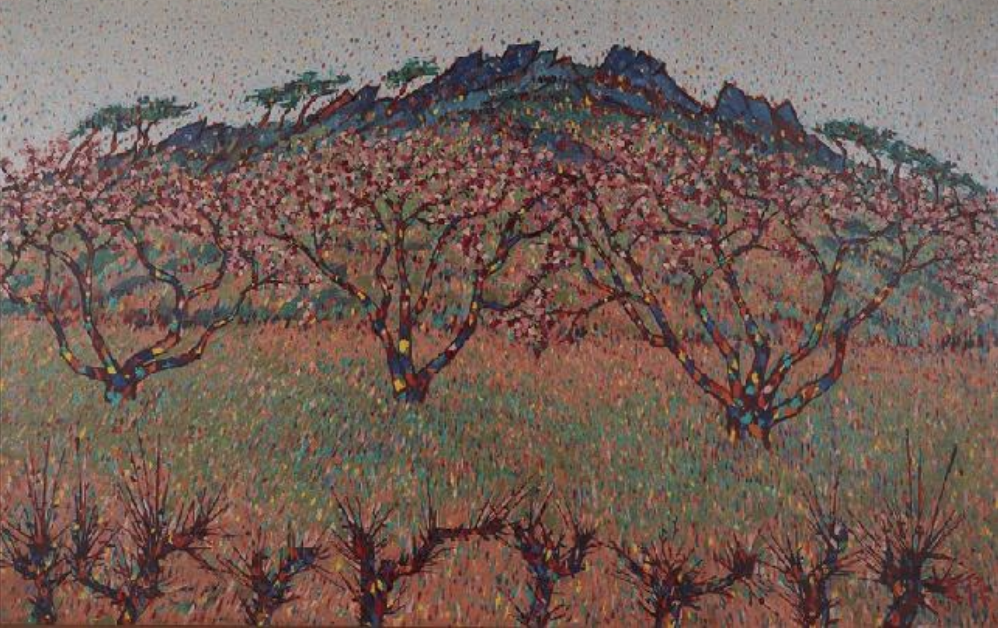
이번 전시는 이대원을 단순히 밝은 풍경을 그린 화가로 보지 않는다. 그의 환한 화면은 타고난 낙천적 기질의 산물이 아니라, 오랜 관찰과 배움, 절제를 거쳐 이룬 조형적 성취였다. 자수의 색실, 나전칠기의 빛, 화각의 투명한 색, 동양화의 운필과 준법은 그의 화면에서 직접적인 재현으로 나타나지 않는다. 그것들은 색선과 색점, 색면이 중첩된 현대 회화의 언어로 전환되었다. 그의 빛은 색점을 나란히 놓아 시각적 혼합을 일으키는 신인상주의 점묘의 빛과 달리, 화면 위에 떠 있지 않고 표면 안에 박혀 쌓인다.
이대원은 서양화를 그렸지만 한국의 공예와 동양 회화가 지닌 조형 방식을 자신의 회화 안에서 주체적으로 재구성했다. 전통은 그에게 빌려 오는 소재가 아니라 화면을 이루는 바탕이었으며, 서구의 모더니즘 역시 그대로 따를 양식이 아니라 스스로 소화하고 넘어설 대상이었다. 배우되 갇히지 않았고, 이어가되 휩쓸리지 않았다. 그리고 같은 장소를 수십 년 동안 바라보며 자신만의 색채와 리듬을 완성해 갔다.
그의 그림에 슬픔이 보이지 않는 것은 슬픔을 몰랐기 때문이 아니다. 그는 많은 역할과 책임을 감당했고, 그 모든 이름을 잠시 내려놓은 농원에서 그림을 그렸다. 이 전시는 우리가 잘 알고 있다고 생각했던 이대원의 그림을 다시 바라보는 자리다. 그 밝음의 안쪽에 깃든 축적과 절제의 시간을 따라가다 보면, 우리는 마침내 그가 도달한 환하고 평정한 세계와 만나게 된다. 당신을 슬프게 하는 것은 하나도 없는, 바로 그 세계와.
이미지: 이대원, 농원, 1979
Lee Daiwon (1921–2005) is one of the most widely beloved artists in modern and contemporary Korean art history. Depicting orchards, mountains, ponds, and fields in an array of vivid colors, his landscape paintings have long captivated the eyes and hearts of many.
He became known by various epithets, such as the “happiest painter in the world” and the “fortunate painter.” But because of this familiarity, have we perhaps viewed his paintings too superficially?
This exhibition refrains from considering Lee Daiwon simply as a painter of bright scenery. His radiant works were not the products of an innate optimism, but the results of decades of disciplined study, sustained experimentation, and formal refinement. His paintings do not merely replicate the colored threads of embroidery, the light of lacquerware inlaid with mother of pearl, the translucent hues of oxhorn crafts, and the dots and lines of Eastern ink wash painting. In his works, those cultural traditions are completely reborn in the form of contemporary paintings, built up layer by layer through colored lines, dots, and planes. And unlike the light of Neo-Impressionist pointillism, in which colored dots are juxtaposed to merge within our vision, the light in Lee’s paintings does not float across the surface, but is embedded and accumulated within it.
Lee Daiwon used Western oil paints, but within that medium, he revitalized the aesthetic effects of Korean traditional crafts and Eastern ink wash painting, including their textures, lines, dots, and treatment of light. He did not appropriate traditional culture merely as subject matter, nor did he blindly follow Western modernism. He learned from many sources without becoming confined to any one, and he inherited the past without simply imitating it. Looking out across the same location for decades, he steadily built up his colored dots and lines, layer upon layer.
The absence of sadness in his paintings is not because he was ignorant of sorrow. He carried many roles and responsibilities, which he temporarily set aside in order to paint. This exhibition serves as an occasion to reexamine the paintings of Lee Daiwon that we thought we knew so well. By tracing the countless hours of restraint and accumulation nested within his brightness, we ultimately encounter the true world of radiance and serenity that he achieved—a world where there is absolutely nothing to make you sad.
Image: Lee Daiwon, Farm, 1979