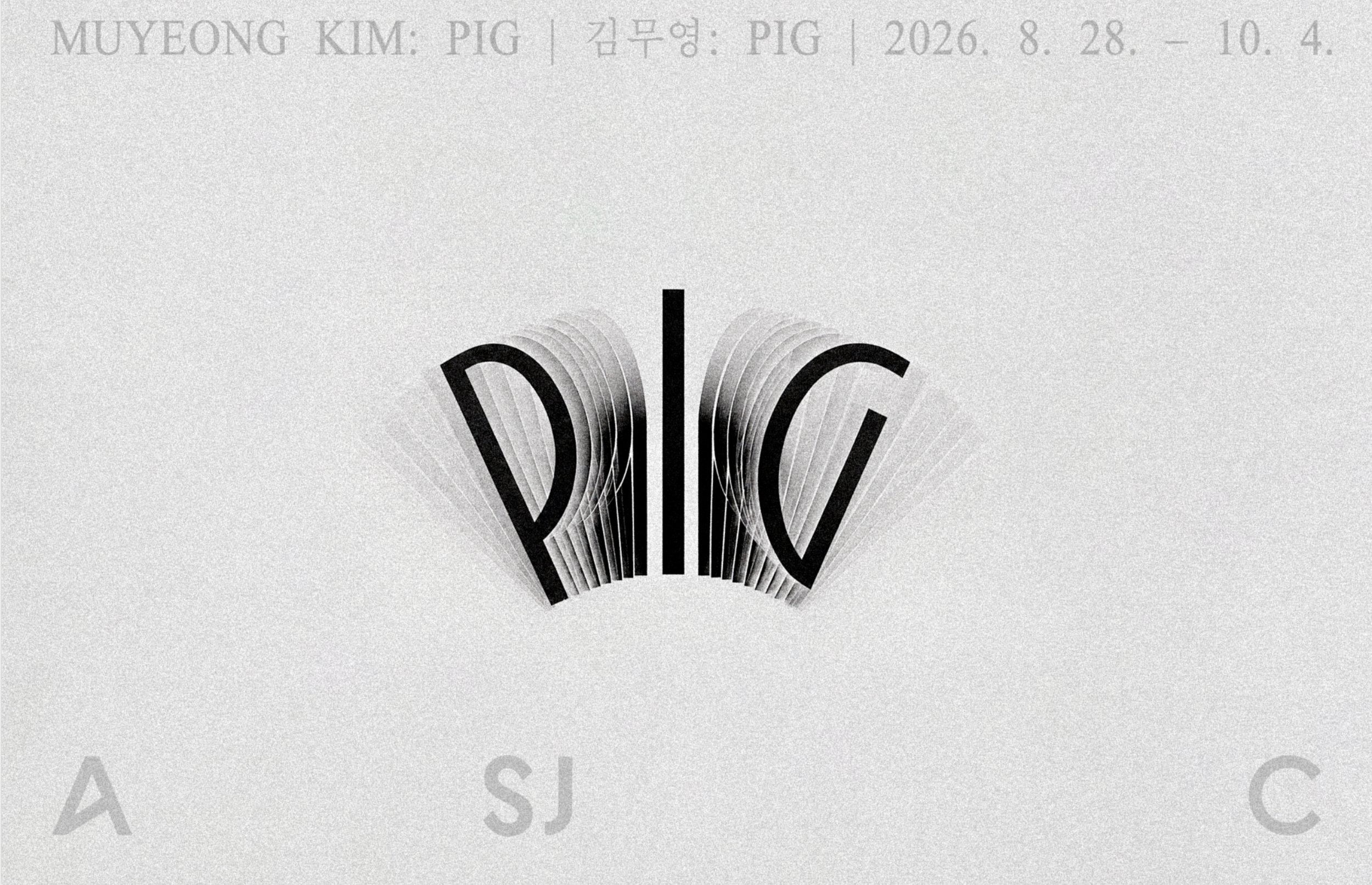
전시 소개 ABOUT THE EXHIBITION
아트선재센터는 2026년 8월 28일부터 10월 4일까지 《김무영: Pig》를 개최한다. 미술관 지하 1층에 위치한 아트홀에서 열리는 이번 전시는 김무영의 첫 미술관 개인전이자 극장을 활용한 전시다. 연극적인 것의 역사와 그 메커니즘을 탐구해 온 작가는 그동안 개념적 연구의 대상이었던 ‘극장’을 실제 공간으로서 탐구한다. 이번 전시에서는 소록도에서 촬영한 신작 사진과 공사 중인 서대문형무소를 촬영한 흑백 사진 연작, 신작 조각 등을 함께 선보인다. 흑백 사진 연작은 현실의 색을 구현하고자 했던 초기 사진술의 채색 기법을 오늘날의 관점에서 되짚어본다.
전시 제목의 ‘피그(Pig)’는 무대 장치를 지탱하는 무게추를 가리키는 연극 현장의 용어다. 공연의 작동에 필수적이지만 관객에게는 보이지 않는 이 장치는 선철(pig iron)[1]에서 유래한다. 김무영은 이러한 장치에 주목하며, 공연과 전통적인 의미의 환영을 가능하게 하는 물질적·역사적 조건을 탐구한다.
공연을 위해 설계된 극장은 관객이 하나의 시점에서 무대를 바라보도록 만든다. 김무영은 이러한 극장을, 전시를 위한 공간으로 전환하여 무대와 시선의 구조, 백스테이지 등 극장 공간에 내재된 조건들을 드러낸다. 전시를 준비하는 과정에서 아트홀이 공사를 앞두고 있다는 사실을 알게 된 작가는 오래된 극장의 일부가 철거될 수 있다는 가능성과 그 시점의 불확실성에 주목하게 되었다. 변화의 가능성 속에 놓인 공간에 대한 이러한 인식은 전시의 구성과 작품 제작 전반에 반영되었다. 이번 전시에서 아트홀은 관람객의 다층적인 시선을 통해 재구성되며, 이를 통해 장소에 축적된 역사와 무대를 가능하게 해 온 은폐된 메커니즘이 드러난다.
[1] ‘피그 아이런(pig iron)’은 용광로에서 나온 쇳물을 주형에 부어 굳힌 선철을 뜻하며, 중앙의 주입로에서 여러 개의 쇳덩이가 뻗은 모습이 어미 돼지와 새끼 돼지를 닮아 이러한 이름이 붙었다. 극장에서는 선철로 제작한 평형추를 ‘피그(pig)’라 부르면서 오늘날의 무대 용어로 정착했다.
Art Sonje Center presents Muyeong Kim: Pig from August 28 to October 4, 2026. Held in the Art Hall on the museum’s B1 level, the exhibition marks Kim’s first solo museum presentation and his first exhibition staged in a theater space. Interested in the histories and mechanisms of the theatrical, Kim shifts his attention from the theater as a conceptual subject to the theater as an actual site. The exhibition brings together new photographs made on Sorok Island, a black-and-white photographic series taken at Seodaemun Prison History Hall during its renovation, and new sculptures. The black-and-white photographic series revisits the hand-coloring techniques of early photography, developed in an attempt to reproduce the colors of reality, from a contemporary perspective.
The exhibition title, Pig, refers to the counterweights used backstage to support stage machinery. Essential to the operation of a performance yet hidden from the audience’s view, these weights take their name from pig iron[1]. For Kim, they draw attention to the theatrical apparatus that makes performance—and illusion in its conventional sense—possible, while also revealing the material and historical conditions on which it depends.
Designed for audiences seated before a single stage, the theater directs attention from a fixed point of view. Kim transforms this theater into an exhibition space, revealing the conditions embedded within it: its stage, sightlines, and backstage systems. For Kim, the Art Hall’s planned renovation became an important condition in the development of the project, bringing into focus the possibility that parts of the aging theater might be removed. Responding to this state of uncertainty, he developed the exhibition around the theater as a space marked by transition, memory, and potential loss. Through the movement and multiple perspectives of its viewers, the Art Hall emerges as a site where accumulated histories and the concealed mechanisms that have long sustained theatrical production come into view.
[1] Pig iron refers to crude iron cast by pouring molten iron into molds. The name comes from a traditional casting arrangement in which a central channel with branching ingots resembled a sow nursing piglets. In theater, counterweights made of pig iron came to be known simply as “pigs,” a term that remains in use backstage.